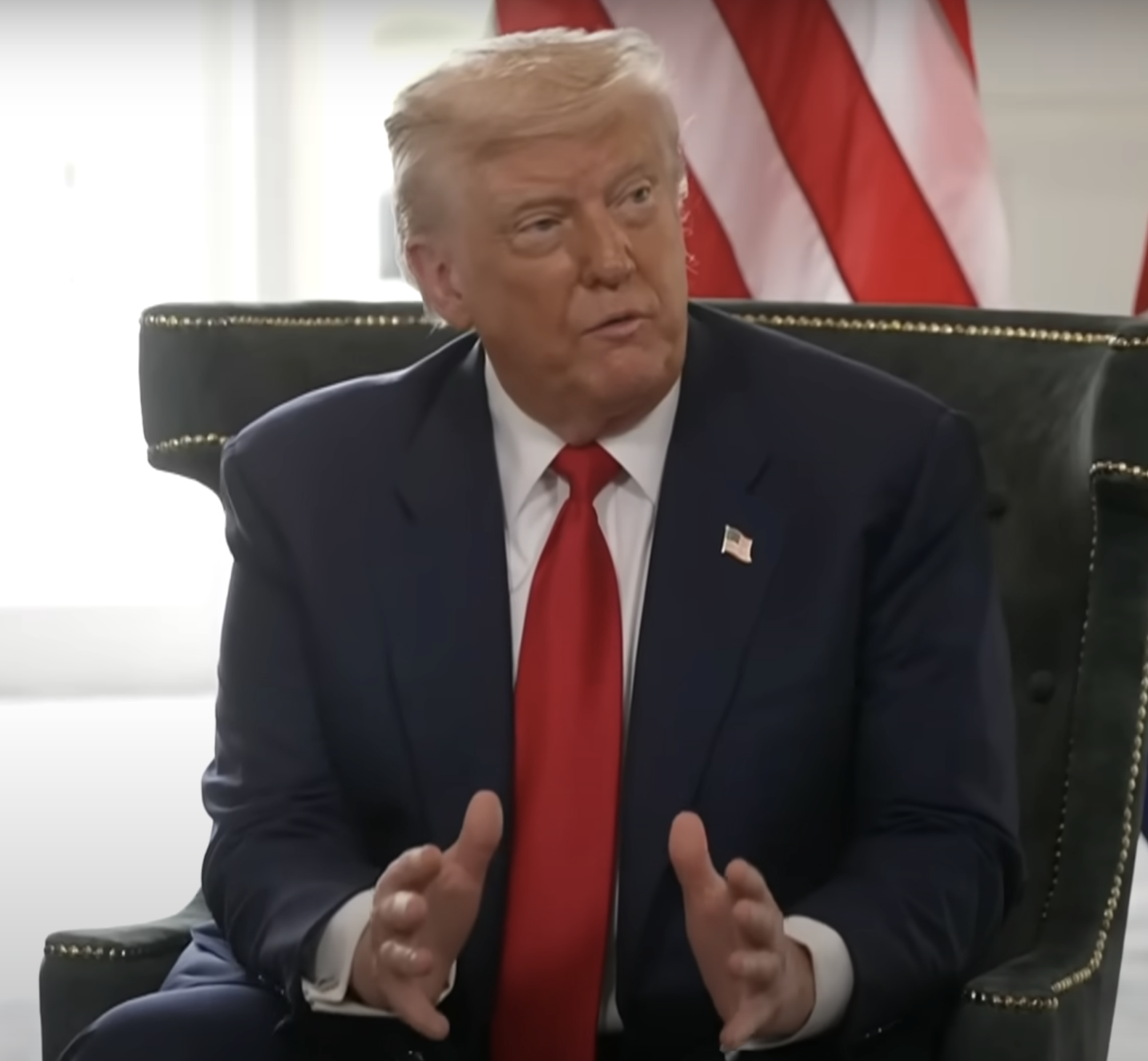
Donald Trump is reportedly weighing a significant shift in US marijuana laws, a move that could reshape the multibillion-dollar cannabis industry and relax long-standing federal restrictions.
At present, marijuana is classified as a Schedule I controlled substance under federal law — the strictest category — meaning it is deemed to have a “high potential for abuse” and “no currently accepted medical use.” This places it in the same legal bracket as heroin, LSD and ecstasy.
Despite this, 24 states and the District of Columbia have fully legalised marijuana, while many others permit its use strictly for medical purposes. The clash between federal prohibition and state-level legalisation has left the industry navigating a complex legal and financial landscape.
According to a Wall Street Journal report published on Friday (8 August), Trump revealed his interest in re-examining cannabis’s federal status at a high-priced fundraiser at his New Jersey golf club earlier this month. Tickets for the event were reportedly $1 million each.
Sources who attended the fundraiser — and spoke anonymously to the WSJ — said that among the guests was Kim Rivers, chief executive of Trulieve, one of the largest cannabis companies in the US. They claimed Trump indicated he was considering reclassifying marijuana as a Schedule III substance.
Such a change would not make marijuana legal nationwide, but it would mark a dramatic softening of federal restrictions. Schedule III drugs are considered to have a “moderate to low potential for physical and psychological dependence,” with less risk than Schedule I or II substances. Current examples include ketamine, anabolic steroids and testosterone.
Reclassification could unlock tax relief for marijuana businesses, expand research opportunities, and smooth the path for medical use — changes that industry advocates have long argued would help legitimise and grow the sector. It would also reduce some of the financial and operational hurdles cannabis companies face due to the current federal classification.
Trump reportedly told attendees, “We need to look at that. That’s something we’re going to look at.”
The Biden administration had also explored reclassification, but the initiative stalled before being enacted. In response to the renewed discussion, White House spokesperson Abigail Jackson told CNN that “all policy and legal requirements and implications are being considered” on the matter, stressing that the president’s guiding priority is “what is in the best interest of the American people.”
For now, the patchwork of state laws remains in place, with cannabis fully legal in states such as California, New York, Colorado and Nevada, while others — including Texas, Georgia, and Indiana — only permit limited medical use, often restricted to CBD oil.
If Trump were to follow through on reclassifying marijuana, it would represent one of the most consequential federal policy shifts on the drug in decades — potentially bridging the gap between state and federal law and reshaping a booming industry still hampered by its Schedule I status.