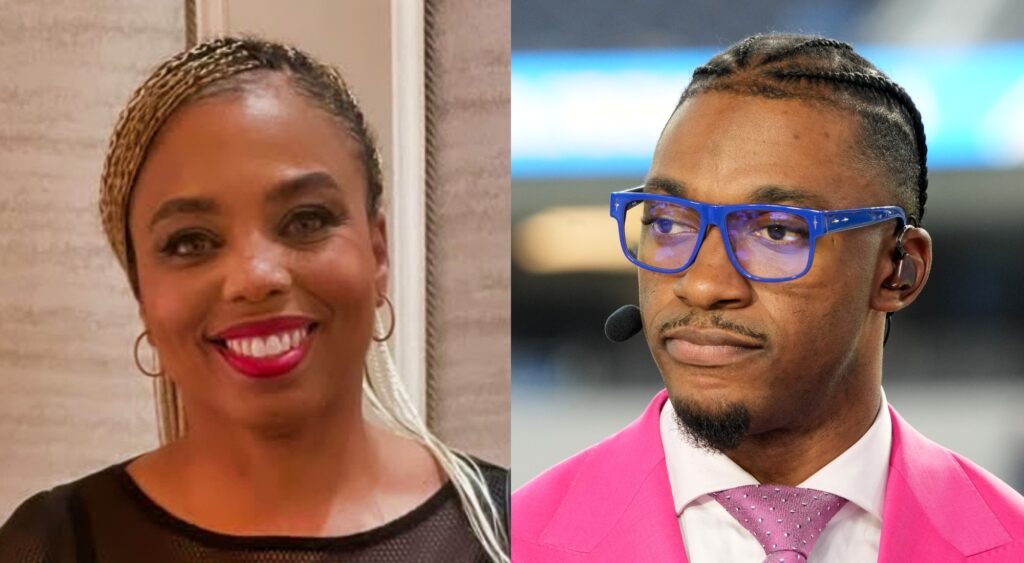
Things are heating up in the sports media world, and Jemele Hill isn’t staying silent. The former ESPN personality weighed in on the growing rift between Robert Griffin III and Ryan Clark, and her take on RGIII’s commentary is crystal clear.
During an appearance on the Dan Le Batard Show on Tuesday, Hill criticized Griffin’s take on the tension between LSU’s Angel Reese and Indiana Fever’s Caitlin Clark. Griffin had accused Reese of “hating” Clark, citing what he described as “repeated, visible actions” on and off the court.
Hill didn’t hold back in her response, calling the former quarterback’s analysis “unfair” and off the mark.
Growing Rift Gets Deeper

“This idea that Angel Reese hates Caitlin Clark is such a loaded thing to say,” Hill said during her segment. “RGIII is entitled to his opinion, but the way he framed it? It missed the mark.”
Hill’s remarks come amid an escalating public spat between Griffin and ESPN analyst Ryan Clark. Clark called out Griffin not just for his opinion on Reese, but also took issue with what he sees as a pattern of social behavior. In an emotional response, Clark said, “Bruh, you know what it is with me and you… You’re a phony bro. One of the worst teammates I ever had both on the field and in TV.”
Griffin responded by defending his sports take while accusing Clark of taking things personal. “Instead of debating my point, he personally attacked me and my family,” Griffin wrote. “That shows how low of a person he is.”
At the heart of this feud lies a layered discussion around race, media narratives, and how criticism lands differently depending on who’s being analyzed. Clark argued that Griffin, who is Black and married to a white woman, lacks the lived experience to fully grasp what Reese, a Black woman, faces in terms of racism and public perception.
“I didn’t attack your wife,” Clark clarified. “I spoke on what you do on social media and TV.”
Jemele Hill, known for tackling tough social issues in sports, rejected RGIII’s take on Reese, calling his framing unfair. The exchange sparked broader debate about media responsibility, race, and public accountability, topics Hill insists won’t fade anytime soon.