Simone Biles And Riley Gaines Engage In A Heated Online Exchange Over Transgender Athletes In Women’s Sports. The Debate Sparks Fierce Reactions From Both Sides Of The Issue.
Simone Biles and Riley Gaines Clash Over Transgender Athletes in Women’s Sports
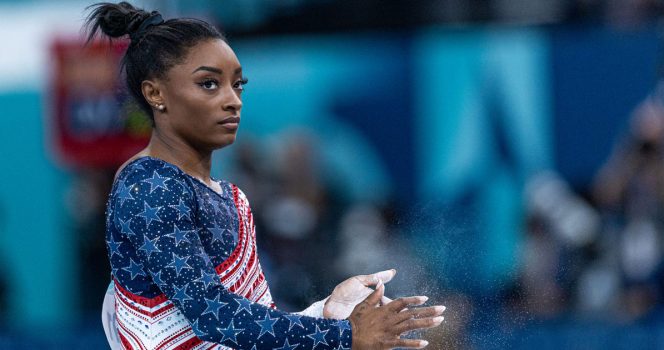
The debate over transgender athletes in women’s sports has reached a new level of intensity, and this time, Olympic icon Simone Biles is in the thick of it. The gymnast’s fiery online exchange with former NCAA swimmer and conservative activist Riley Gaines has sparked a wave of reactions, both in support and opposition.
How It All Began: A Minnesota Softball Team Celebration
Meet Champlin Park, the Class AAAA Softball State Champion for 2025. pic.twitter.com/u2S59c9QSS
— Minnesota State High School League (@MSHSL) June 6, 2025
The controversy started innocuously enough with a celebratory post from the Minnesota State High School League. The league shared a proud photo of Champlin Park’s softball team after their Class AAAA State Championship win. However, the post quickly became a battleground when Riley Gaines — a vocal critic of transgender inclusion in sports — commented, “Comments off lol. To be expected when your star player is a boy.”
Gaines’ comment, which was not explicitly aimed at any particular player but seemed to mock the team, ignited a firestorm online. Critics accused Gaines of targeting a transgender player, and the backlash was swift.
Simone Biles Responds
Simone Biles, never one to shy away from taking a stand, immediately responded to Gaines on X (formerly Twitter), calling her out for what she saw as a personal attack. “@Riley_Gaines_ You’re truly sick, all of this campaigning because you lost a race. Straight up sore loser,” Biles tweeted.
Biles didn’t stop there. She continued to accuse Gaines of bullying transgender athletes and not advocating for inclusion. “If you really cared, you’d be working on creating safe and fair categories,” Biles added. “Instead, you’re just making it worse for everyone.”
Social Media Erupts: Divided Opinions

Biles’ comments quickly divided the internet. Supporters hailed her as a leader for standing up against what they saw as divisiveness and discrimination. One supporter praised Biles, saying, “This is real leadership. Thank you for standing up Simone and everyone else supporting her.”
Others expressed deep admiration for Biles, with one person saying, “I did not know it was humanly possible to respect someone more than I already respected you, you are just truly a class act! 100% of the time The Goat of Goats!”
But the backlash came just as quickly. Critics of Biles accused her of disrespecting Gaines and taking sides in a complex issue. One critic wrote, “Wow, this response is truly unbelievable and completely disappointing to read… Simone called Riley a bully but the words you’ve chosen, as an Olympian & role model, are disrespectful to her & rude.”
Another commenter voiced their disappointment, stating, “Disappointed to see this. But how easy it is to salt the earth behind you as you exit the sport and ensure future women won’t be able to achieve what you did.”
Gaines Fires Back: Accusations Of Body Shaming

Riley Gaines, never one to remain silent, responded in kind. On Instagram, she accused Biles of “body shaming” and “making things personal,” pointing to a now-deleted tweet where Biles allegedly said, “Bully someone your own size, which would ironically be a male @Riley_Gaines.”
Gaines criticized Biles for using her own body as a punchline, accusing her of hypocrisy given her own history of being body-shamed for her physique. The exchange continued to escalate, adding fuel to the already heated discussion on social media.
The Bigger Debate: Transgender Athletes In Women’s Sports
While the online spat between Biles and Gaines was personal, it also tapped into the broader issue of transgender athletes in women’s sports. Riley Gaines, a 12-time All-American swimmer and outspoken advocate for women’s sports, has long argued that allowing transgender women to compete against cisgender women undermines fairness and safety. Gaines became a prominent voice in this debate after her controversial tie with transgender swimmer Lia Thomas at the 2022 NCAA Championships.
Gaines has since become a leading figure in the movement to restrict transgender athletes from competing in women’s sports, testifying before Congress and working with advocacy groups to challenge current inclusion policies.
Meanwhile, Biles has positioned herself as a champion of inclusion, using her platform to advocate for marginalized voices, including transgender athletes. Her stance on the issue has garnered both praise and criticism, with many viewing her support as an extension of her lifelong commitment to breaking down barriers and fostering inclusivity.
Public Figures Weigh In: Jay Feely And Danica Patrick

The Biles-Gaines feud has drawn in more than just the two sports icons. Public figures from various fields have weighed in on the debate, including former NFL kicker-turned-politician Jay Feely, who suggested that Biles wouldn’t have won Olympic medals if she had competed against transgender gymnasts. Feely also accused Biles of putting “biological females in dangerous and compromising situations” with her support for trans inclusion in women’s sports.
Former NASCAR driver Danica Patrick also voiced support for Gaines, criticizing Biles for what she saw as being misled on the issue. Patrick described Biles as having been “red pilled,” a term used to describe someone who has been fed misleading or distorted information. Patrick’s post on Instagram criticized the idea of defending men in women’s sports, calling it “the woke mind virus” and advocating for common sense to prevail.
Conclusion: The Debate Rages On
The heated exchange between Simone Biles and Riley Gaines is far from over, and the larger debate over transgender athletes in women’s sports shows no sign of subsiding. Whether seen as a battle for inclusion or an effort to preserve fairness in competition, the issue remains emotionally charged and divisive.
As figures like Biles and Gaines continue to lead the conversation, the future of women’s sports will likely be shaped by these ongoing debates — one tweet, one comment, and one viral moment at a time.