- 54 adults (ages 18–39) from the Boston academic community (MIT, Harvard, etc.) participated.
- They were randomly assigned to three groups:
- LLM (ChatGPT users),
- Search Engine (Google Search),
- and Brain‑Only (no tools).
- Over the first three writing sessions, participants remained in their group. In Session 4, group assignments switched: LLM users became Brain‑Only (LLM→Brain), and vice versa (Brain→LLM).
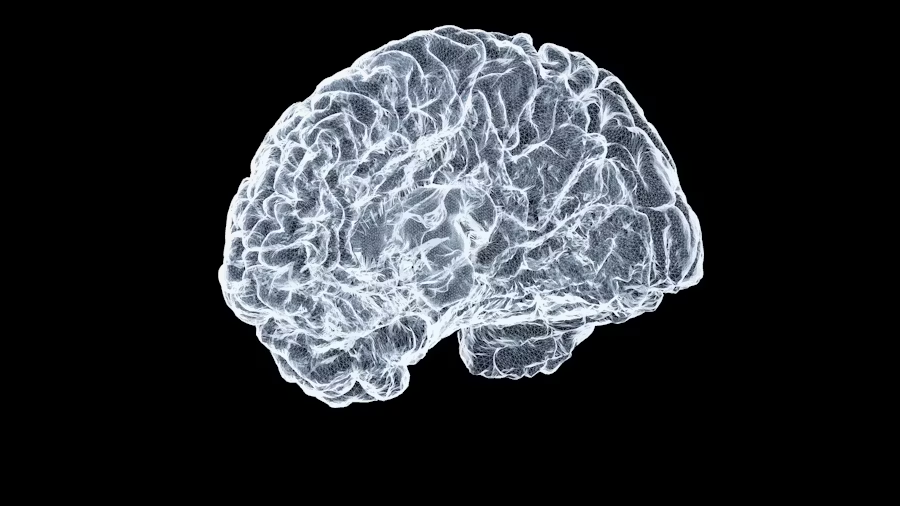
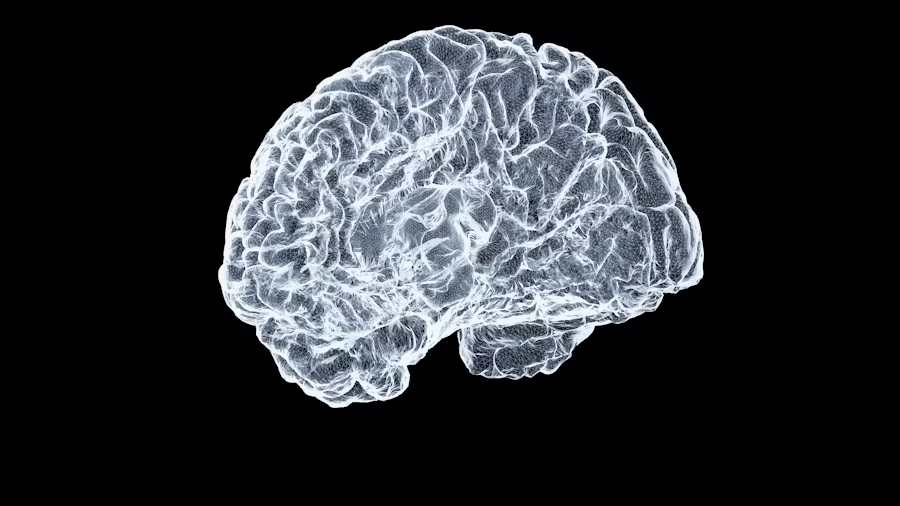
Participants using ChatGPT ranked lowest in neural engagement. Brain connectivity scores plunged—from an average of 79 in Brain-Only to 42 in LLM users—a 47% drop in cognitive engagement. Brain-Only writers demonstrated the strongest, most distributed neural networks, particularly within alpha and beta bands associated with creativity and memory formation.
A staggering 83.3% of LLM users failed to recall even one sentence they wrote minutes earlier, while brain‑only participants had little trouble remembering their responses.
LLM writings were perceived as detached and mechanical—human evaluators labeled essays “robotic,” “soulless,” and lacking originality. LLM users themselves reported minimal ownership over their work.
Even after switching back to writing without AI, previous LLM users continued to show reduced neural engagement, indicating lasting cognitive weakening rather than temporary reliance. The reverse switch—for Brain→LLM—performed better, mirroring Search Engine patterns.
Over four months and multiple essay sessions, LLM users exhibited:
- Progressively declining memory retention and motivation
- Greater use of copy-and-paste prompts instead of original ideation
- Lower behavioral performance, linguistic complexity, and creativity compared to other groups.
Researchers coined this phenomenon “cognitive debt”—the neural and educational cost incurred from outsourcing mental effort to AI.
- First-of-its-kind neural data on AI use. The MIT Media Lab is the inaugural institution to monitor EEG-based brain connectivity in real time during AI-assisted writing tasks.
- Quantifiable loss of creative and memory function, especially in relation to GPT usage.
- Search tools fare better. Users relying on Google Search maintained stronger neural activity and memory than those using ChatGPT.
- Real-world implications for education and productivity. While AI speeds up tasks—reducing writing time by ~60%—it also reduces mental effort needed for learning by ~32%.
- The New Yorker reports MIT and other institutions (notably Cornell and Santa Clara University) documenting creativity loss and homogenized writing among AI‑assisted users. Their output lacked diversity and originality.
- The Washington Post cautions that these are preliminary findings: limited sample sizes, non–peer reviewed. But they emphasize a growing concern that AI could encourage mental passivity instead of critical engagement.
- Educators and psychologists including Dr. Susan Schneider and Jean Twenge testify to eroding attention spans and critical thinking skills among students who rely heavily on AI tools. Essays become superficial and formulaic.
Just as muscles atrophy without exercise, brain networks weaken with disuse. AI may take over repetitive tasks—but overreliance can breed dependency and intellectual stagnation.
Based on Session 4 results: starting with your own cognitive effort, and employing ChatGPT later (Brain→LLM), maintains stronger memory, engagement, and creativity.
Let ChatGPT assist with ideation or editing—but retain core cognitive tasks like critical reasoning, synthesis, and creative writing. This approach prevents tool-offloading and preserves neural engagement.
In business or education, speed can be seductive—but if efficiency replaces understanding, the cognitive price may be steep.
MIT’s brain-scan experiment provides the first neurobiological evidence that dependence on ChatGPT may carry cognitive consequences.
While AI can boost speed and output quality, overuse risks memory loss, reduced originality, and long‑term reduced brain activity.
These findings should not sound an alarm to shun AI entirely—but rather underscore the importance of intentional, balanced, and mindful AI usage.
- MIT Preprint – “Your Brain on ChatGPT: Accumulation of Cognitive Debt”
https://arxiv.org/abs/2506.08872 - MIT Media Lab – AI’s Effects on the Brain
https://www.media.mit.edu/articles/a-i-s-effects-on-the-brain/ - The New Yorker – A.I. Is Homogenizing Our Thoughts
https://www.newyorker.com/culture/infinite-scroll/ai-is-homogenizing-our-thoughts - Washington Post – Is AI Rewiring Our Minds?
https://www.washingtonpost.com/health/2025/06/29/chatgpt-ai-brain-impact/ - Laptop Magazine – This Is Your Brain on ChatGPT
https://www.laptopmag.com/ai/chatgpt-mit-study-brain-activity-memory-impact - Time Magazine – The Dark Side of ChatGPT in Education
https://time.com/7295195/ai-chatgpt-google-learning-school/ - The Times UK – Using ChatGPT Might Be Making You Dumber
https://www.thetimes.co.uk/article/using-chatgpt-for-work-it-might-make-you-more-stupid-dtvntprtk - Le Monde – ChatGPT Use Significantly Reduces Brain Activity
https://www.lemonde.fr/en/science/article/2025/07/02/chatgpt-use-significantly-reduces-brain-activity-an-mit-study-finds_6742927_10.html - LinkedIn Summary by Researcher Tridib Bordoloi (MIT)
https://www.linkedin.com/posts/tridib-bordoloi-51197011_mit-recently-completed-the-first-brain-scan-activity-7355981364690636801-etxG - New York Post – Educators Warn That AI Is Making Kids Lazy
https://nypost.com/2025/06/25/tech/educators-warn-that-ai-shortcuts-are-already-making-kids-lazy/