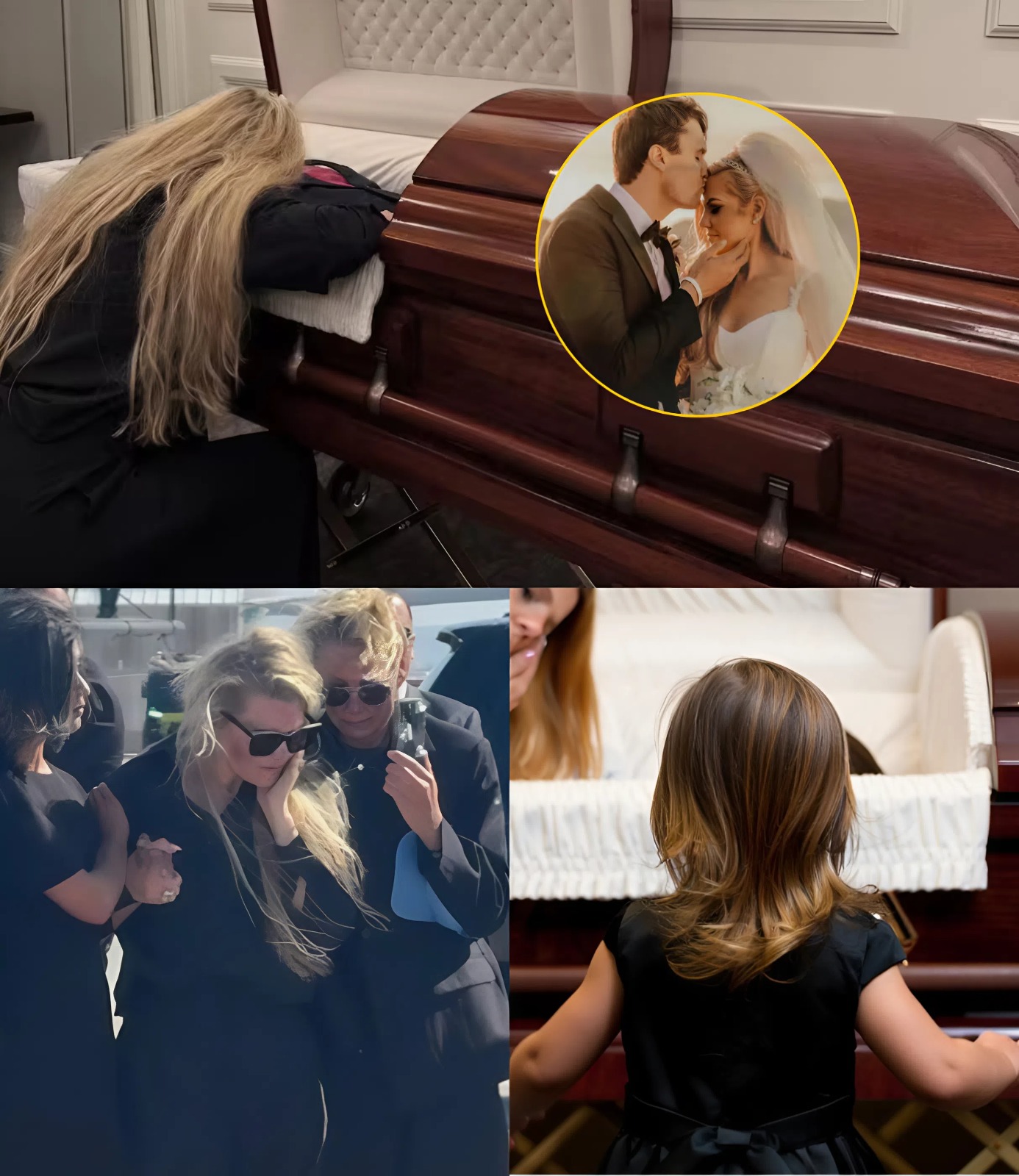
The funeral hall was bathed in soft candlelight, hundreds of flames flickering against polished wood and the pale, tear-streaked faces of mourners. Rows of guests—family, friends, colleagues, and supporters—sat in a solemn silence, each holding their own private grief tightly within. Public eulogies had been delivered, hymns had been sung, and speeches had recounted Charlie Kirk’s life, achievements, and impact. Yet, despite the meticulous planning and formal tone of the ceremony, nothing could have prepared anyone for the quiet, yet seismic, moment that would unfold: his young daughter stepping forward.
Clutching a single rose in one hand and a photograph of her father in the other, she approached the front of the hall with a hesitancy that made every movement feel magnified. The room seemed to hold its collective breath. Then, in a voice so small it was almost swallowed by the vast hall, yet so piercing it cut through the atmosphere like a blade, she whispered:
“Daddy, we love you.”
The effect was immediate and profound. The fragile, honest utterance shattered the composed veneer of the funeral. Adults who had restrained their tears for hours sank into grief, some burying their faces in their hands, others leaning on the pews beside them. Even seasoned mourners—those accustomed to funerals, public ceremonies, and displays of controlled emotion—were undone. In that moment, the formality of the public farewell fell away, revealing the intimate, private pain that had been hidden beneath the ceremonial structure.

The Power of a Child’s Grief
Psychologists studying child bereavement emphasize that children process and express grief differently from adults. While adults often rely on ritual, performance, or socially prescribed behaviors to navigate their sorrow, a child’s grief is raw, instinctive, and immediate. Their expressions—whether tears, words, or gestures—bypass the filters adults use to contain and regulate emotion.
Dr. Lila Mendoza, a specialist in childhood grief, explains, “When a child speaks at a funeral, the impact is dual: it validates communal grief while exposing its deepest, unspoken dimensions. Children articulate what adults often cannot. Their vulnerability becomes a mirror in which the entire community sees its own pain reflected.”
In this context, the daughter’s whispered words were not only a personal tribute but also a public revelation of the private grief shared by all who knew Charlie Kirk. In her simplicity lay a devastating universality: the love between parent and child, the incomprehensibility of loss, and the fragility of human life.
Symbolism in Small Gestures
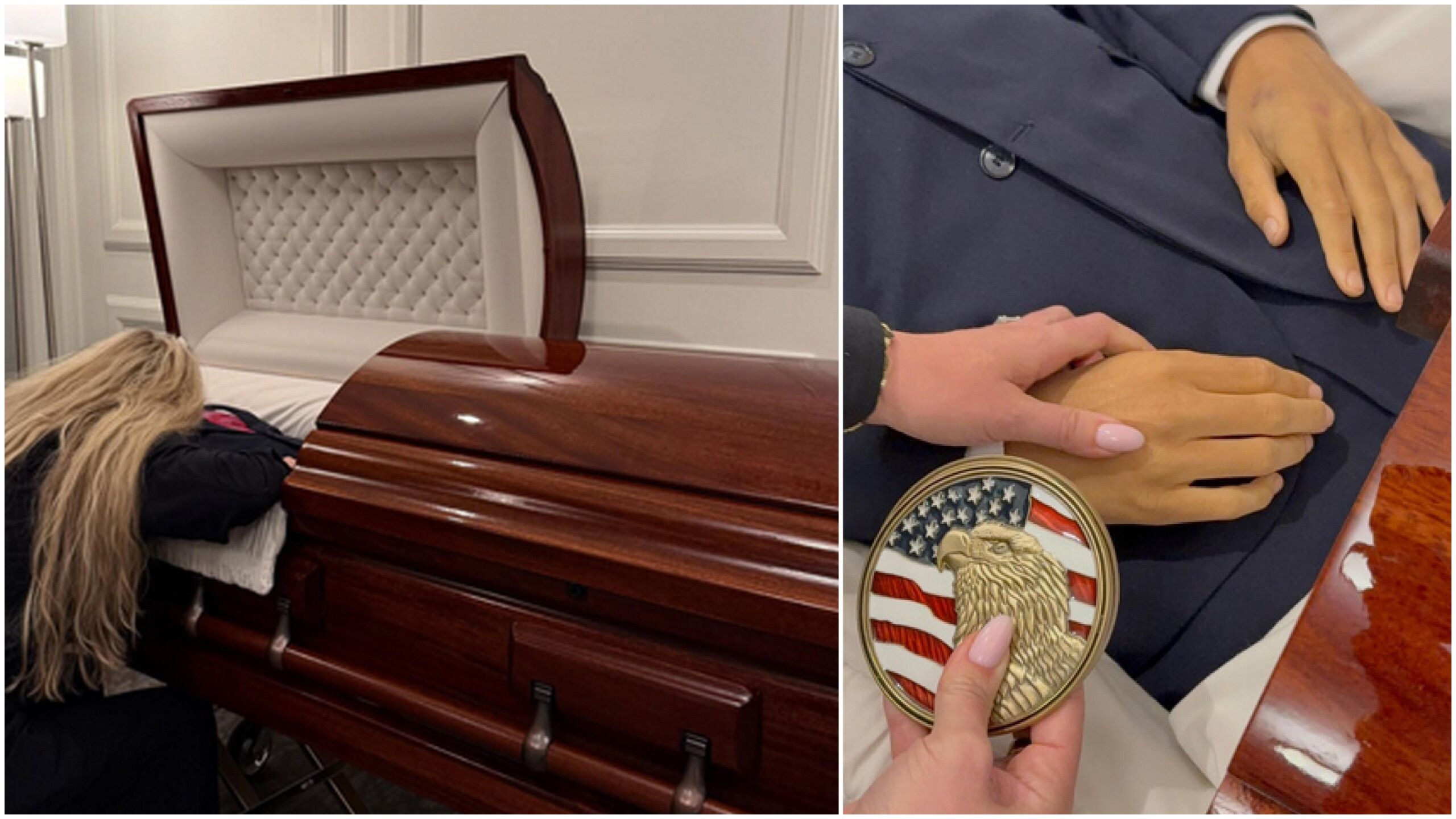
The rose and photograph in the young girl’s hands were more than props—they were symbols of memory, love, and connection. The rose, delicate and transient, spoke to the fleeting nature of life and the permanence of grief. The photograph, held reverently, became a tangible link to the father whose physical presence had been extinguished. Together, these items transformed a fleeting gesture into a ritual act of remembrance, conveying more than words ever could.

Anthropologists note that simple, symbolic acts often resonate more deeply than elaborate statements because they invite projection. Observers fill the space of the gesture with their own memories, emotions, and experiences. In this case, each mourner could see in the child’s rose and photograph their own relationships, losses, and private pain.
Emotional Resonance Among Mourners
Eyewitnesses describe the impact as immediate and overwhelming. Mourners who had spent hours maintaining composure suddenly found themselves unmoored. Some wept openly for the first time, while others reached out to console neighbors or family members.
A longtime friend of the Kirk family recalled: “It was as if the room itself had shifted. Her voice, so small yet so full, carried every unspoken feeling in that hall. All the sorrow we’d been holding in—every thought we hadn’t dared to voice—suddenly had a conduit.”
This response underscores the phenomenon often observed in grief psychology: witnessing authentic, vulnerable expressions of emotion can create collective emotional release. The child’s tribute became a catalyst, allowing mourners to confront and externalize their own sorrow in a way that structured rituals often cannot.
Private Grief Amidst Public Ritual
Charlie Kirk’s life was lived in the public eye. Funerals of public figures often navigate a delicate tension: honoring achievements while acknowledging the intimate void left for family and loved ones. Speeches, formal ceremonies, and public condolences can, at times, overshadow the personal grief that lies beneath.
The daughter’s act provided a counterbalance. Her whispered words reminded everyone that beyond the public persona, beyond the accolades and the controversies, there was a family—and especially a child—experiencing a grief too profound for any ceremony to fully encompass. The private pain, often invisible, was laid bare in that small, haunting tribute.
The Universality of Childhood Expression
Children’s expressions of grief often resonate because they embody a form of emotional honesty largely absent in adults. Adults are socialized to manage their responses, to maintain decorum, and to navigate grief within cultural norms. Children, unencumbered by these expectations, speak and act from a place of authenticity.
In this way, the daughter’s tribute served as more than a personal moment; it was an unintentional lesson in human vulnerability. It allowed adults to confront the raw reality of death, to engage with grief without the filters of ritual or decorum, and to witness the unmitigated truth of loss.
Dr. Mendoza adds, “When a child grieves publicly, they model a kind of courage adults often suppress. We see them expressing something fundamental about our own humanity: that grief is natural, necessary, and sometimes overpowering.”
The Role of Memory and Legacy
Beyond the immediate emotional impact, the act of stepping forward and speaking to her deceased father helps the child process her own grief while preserving his memory. Psychologists emphasize that rituals involving active participation—placing a rose, speaking aloud, holding a photograph—aid in the development of coping mechanisms and long-term memory consolidation of the deceased.
Moreover, the act creates a shared experience for the mourners. The tribute becomes a collective memory, a visual and emotional symbol of love, loss, and human vulnerability that persists long after the candles have burned out and the flowers have wilted. It transforms private grief into a communal reflection, allowing strangers to connect with the universality of mourning.
Collective Mourning and Social Reflection
The daughter’s tribute also illustrates the social dimension of grief. Funerals function as both personal and collective experiences: they allow private sorrow to be witnessed, validated, and shared. In this ceremony, her gesture became a fulcrum for collective mourning, uniting strangers through the shared recognition of a child’s love and loss.
Social psychologists note that shared grief strengthens communal bonds, even among those who did not personally know the deceased. It reminds participants of the fragility of life, the inevitability of death, and the shared emotional landscape of humanity. The child’s simple words provided a mirror in which all mourners could see their own vulnerabilities reflected.
Enduring Impact
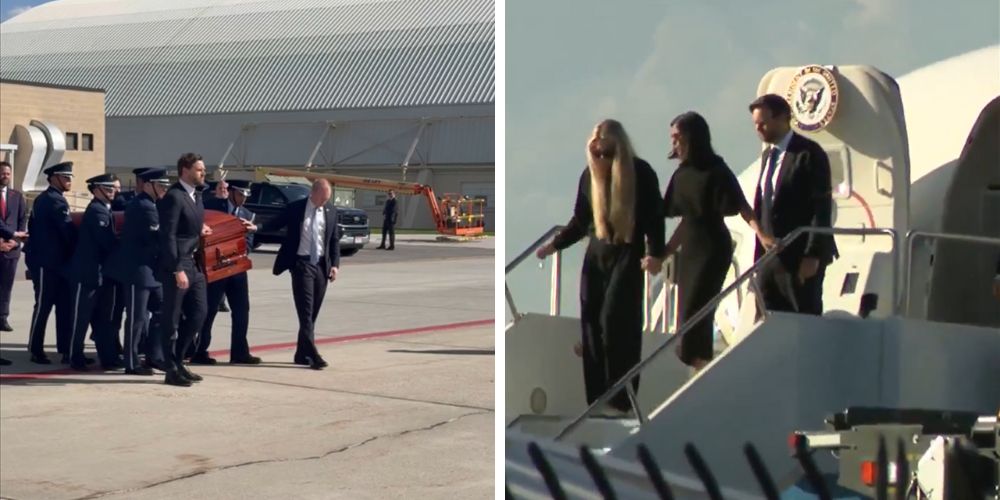
In the days following the funeral, photographs and accounts of the daughter’s tribute circulated widely. Online commentators and news outlets highlighted the power of her gesture: three words, whispered with innocence and love, capable of undoing an entire hall of mourners. The moment became emblematic of the human capacity for emotional expression, bridging the divide between personal and public grief, between family and community.
This tribute will likely linger in memory far longer than any speech or formal ceremony, precisely because it combines authenticity, vulnerability, and symbolism. It stands as a reminder that grief is not only an individual experience but also a communal one, capable of connecting hearts across generations and social divides.
Conclusion
The daughter’s tribute at Charlie Kirk’s funeral was fleeting but transformative. In a moment measured in seconds, she conveyed the depth of a child’s love, the devastation of loss, and the raw humanity often hidden beneath public ceremonies. Her whispered words—“Daddy, we love you”—broke the veneer of formality, united mourners in shared grief, and created a lasting symbol of remembrance and love.
Through her gesture, she reminded everyone present that the truest expressions of grief are often unpolished, intimate, and profoundly human. In the rose, the photograph, and the small but shattering voice, the mourners—and the nation—witnessed the enduring power of love, memory, and the courage to express sorrow, no matter one’s age.
Even as the candles burn out and the flowers fade, that whispered tribute remains a testament to the hidden pain behind public farewells and the universal resonance of a child’s heartbreak.