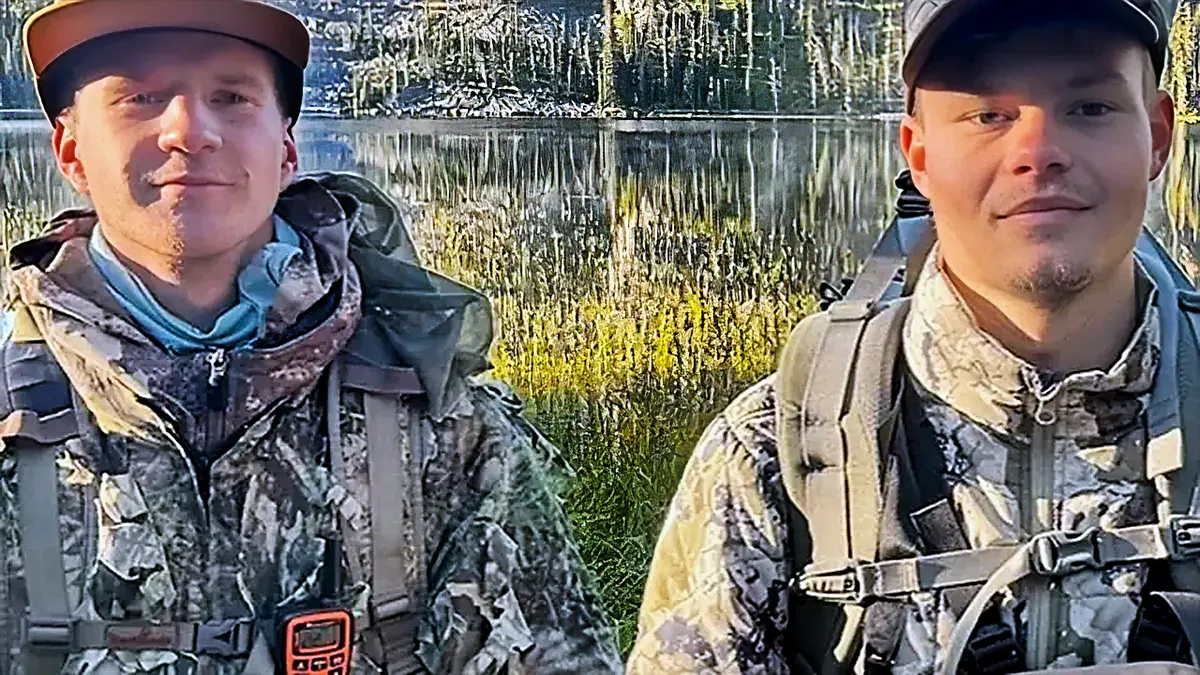
Two 25-year-old elk hunters found dead after a days-long search in southern Colorado were killed by a lightning strike, the county coroner said, confirming preliminary findings that explained why investigators initially reported no obvious injuries or signs of foul play. Conejos County coroner Richard Martin told ABC News the men “were killed when a tree they were standing near was struck by lightning,” a conclusion based on autopsy examinations and scene evidence gathered in the high country near the Colorado–New Mexico border.
Authorities identified the victims as Andrew Porter of Asheville, North Carolina, and Ian Stasko of Salt Lake City, Utah. They were last heard from on 11 September when Porter transmitted a location ping from a satellite device to his fiancée during their multi-day backcountry hunt. When the pair did not check in as planned, families alerted authorities and a large search began on 13 September. Their bodies were located on 18 September in remote terrain of the Rio Grande National Forest after aircraft, drones, dogs, ground teams and volunteers combed the area through bouts of wind, rain and early autumn cold.
Investigators said early observations at the scene complicated the initial assessment. The men had “no visible injuries or initial signs of foul play,” Denver7 reported after interviewing Martin, who noted that the official autopsy and toxicology would take weeks. That lack of external trauma guided search leaders away from scenarios such as a fall, animal attack or gunshot, and prompted pathologists to look for forensic markers consistent with a lightning event.
The coroner’s preliminary findings, shared with multiple outlets, described telltale signs including slight external burns and singed hair. People reported Martin’s assessment that the pattern of marking and other indicators were consistent with “an intense electrical strike,” while full lab work was expected to take six to eight weeks. No evidence of criminal activity was found.
Family members and local news organizations tracked the search in real time as teams followed sparse traces in steep timber and meadows west of Trujillo Meadows Reservoir, a high-elevation area about four miles north of the state line. Their vehicle was found at the Rio de los Pinos trailhead, a popular access point for hunters entering the national forest’s dense spruce and fir. The weeklong operation drew responders from county sheriff’s offices, state agencies and volunteer rescue groups, aided by aviation support when weather allowed.
Confirmation of the lightning cause reached families as the men’s remains were recovered for transport. In a message relayed on social media and cited by national outlets, Porter’s fiancée, Bridget Murphy, called the deaths a “horrific act of nature,” adding that both men were seasoned outdoorsmen who had done nothing reckless but were overcome by a fast-moving mountain storm. “They were experienced,” she said in the post, emphasizing that the strike was sudden and unforeseen.
The timeline stitched together by search records and family updates shows the hunters moving deeper into the backcountry as a series of late-season storms swept across the San Juan mountains. A National Weather Service outlook had flagged scattered thunderstorms capable of frequent lightning and gusty winds over portions of southern Colorado during the week the men went missing. While the specific cell that produced the fatal strike has not been singled out publicly, the coroner said the men appeared to have sought cover under a large tree when it was hit. “Killed when a tree they were standing near was struck by lightning,” is how Martin described it to ABC.
The case has drawn attention beyond hunting circles because it highlights a hazard that persists even as outdoor users carry satellite messengers, detailed forecasts and digital maps. According to National Weather Service data, lightning kills an average of about two people per year in Colorado and injures roughly a dozen, but the state ranks near the top nationally in lifetime fatalities because of its heavy concentration of outdoor activity at high elevations. A Denver Gazette analysis published Wednesday, citing NWS figures, reported that Colorado has averaged around 500,000 cloud-to-ground strikes per year and ranks among the highest states for lightning deaths across decades of records.
The National Weather Service’s 2025 fatality map shows at least 16 lightning deaths nationwide so far this year, part of a seasonal pattern in which single strikes claim victims engaged in hiking, fishing, ranching, construction and other outdoor pursuits. Backcountry incidents often share common features: storms that build rapidly on otherwise fair-weather days, strikes to isolated trees and ridgelines, and victims who are miles from enclosed shelter when the first thunder is heard.
Porter and Stasko were described by relatives as close friends who travelled to Colorado for the elk season after years of hunting and backpacking elsewhere in the West and Southeast. They carried a satellite communicator, a device friends say Porter used routinely to check in with family during long days without mobile service. That ping on 11 September—the last confirmed contact—guided early search efforts toward a swath of country laced with old logging roads, game trails and creek bottoms, terrain where thunderstorms can arrive quickly and where hikers often cluster under timber when hail and gusts hit.
The discovery of their bodies came after a methodical grid search that expanded from the vehicle’s location. Colorado Public Radio reported that both men were found on 18 September, the same day the families posted a brief note confirming the worst. The coroner cautioned then that final identifications would be released after autopsies scheduled early the following week, while reiterating that there were no early signs of violence.
The circumstances underscore long-standing safety guidance for the Rockies, where storms commonly develop around midday. Lightning-safety experts advise descending from ridgelines and getting away from isolated trees at the first sound of thunder, spreading out from companions to avoid multiple casualties, and, if no enclosed structure or vehicle is available, seeking lower ground away from tall objects and metal gear. The Colorado Sun noted this week that the state is “third-highest in the nation for lightning deaths,” and urged backcountry users to plan routes around the afternoon storm cycle, an approach guides call “alpine starts” to beat predictable convective build-ups.
Martin’s conclusion aligns with observations at the site, including the position of the bodies and localized burning consistent with a ground current from a nearby tree strike. Media accounts quoted the coroner and rescuers as saying the men were together when the storm hit. Fox affiliates summarised Martin’s view that the deaths likely occurred “in an instant,” a description he has used for other lightning fatalities in the region. The coroner has said full toxicology and autopsy results—standard in sudden, unexplained deaths—will take several weeks but are not expected to change the cause.
News of the cause has brought an outpouring of condolences from the hunting community and prompted a fresh round of reminders from search-and-rescue teams about trip planning. The Colorado Sun’s early coverage of the search quoted family appeals for additional air support and terrain-savvy volunteers; after the discovery, the same channels carried thanks to local ranchers and residents who opened cabins, provided horses and helped ferry rescuers as weather windows appeared. A GoFundMe organized by relatives said donations not used for search expenses would be directed to recovery and memorial costs.
Porter’s fiancée, who had been posting daily updates during the search, wrote after the coroner’s announcement that the men were “loving, brave, and full of dreams,” words relayed in national coverage as friends shared photographs from previous hunts and backpacking trips. “Horrific act of nature,” she wrote of the strike, adding that the families were grateful to the volunteers who “never gave up” even as days passed without contact. Those sentiments reflected what rescuers often describe after high-profile lightning deaths: the suddenness of the event and the thin margin for decision-making once thunder is audible.
Local stations that followed the operation emphasised the geography: a patchwork of steep forested slopes, stream-cut meadows and weathered two-tracks near the headwaters of the Rio de los Pinos. Roads in that country are often passable only to high-clearance vehicles, and storm damage can down trees across routes in minutes. That setting, familiar to thousands of hunters who draw tags for the early September archery and rifle seasons, is also one where lightning seeks out the tallest available conductors—solitary trees, exposed ridges, and people who pause under those trees when the first large drops fall.
In interviews with Colorado outlets, Martin said his office would release final autopsy documents after lab work is complete, a process he estimated would take eight to ten weeks. Denver7, which first reported his lightning determination to local audiences before national outlets matched it, noted that the finding came as Colorado forecasters warned of another round of late-season storms. It was a reminder, the station said, of the state’s “high lightning danger,” borne out by decades of fatality data compiled by NOAA and the National Lightning Safety Council.
State and national statistics put the deaths of Porter and Stasko into that broader context. Since 1980, at least 101 people have been killed and nearly 500 injured by lightning in Colorado, according to NWS tallies. While Florida and Texas often lead in annual fatalities because of population and thunderstorm frequency, Colorado’s combination of outdoor recreation and high-elevation exposure keeps it near the top in long-term rankings. The National Weather Service’s Pueblo office says the state averages two lightning deaths per year, a figure that can spike in summers with active monsoon patterns.
The case now closes a search that consumed the attention of two families and a mountain county’s emergency crews for the better part of a week. It also adds two names to a spreadsheet that safety advocates update each season to track who, where and what people were doing when storms turned lethal. The specifics will remain indelible to those who knew the victims—the last satellite ping, the tree that seemed like shelter moments before the strike, the volunteer caravans weaving up canyon roads—and the core finding is now part of the public record. As the coroner put it, the two young hunters died when lightning hit a nearby tree and the current found them where they stood.
Search coordinators and forecasters who spoke to local media during the week returned, in the aftermath, to simple advice that is repeated every summer but often ignored when the sky is blue at noon: if thunder roars, go indoors, and in the backcountry plan days to be below treeline and off ridgelines by early afternoon. In places like Conejos County, where the forest gives way to meadows with few enclosed shelters, that means turning around sooner than seems necessary. Porter and Stasko, by all accounts, knew the woods and the weather better than most. The storm that took them was, in their families’ words, a violent accident of nature in a landscape they loved.