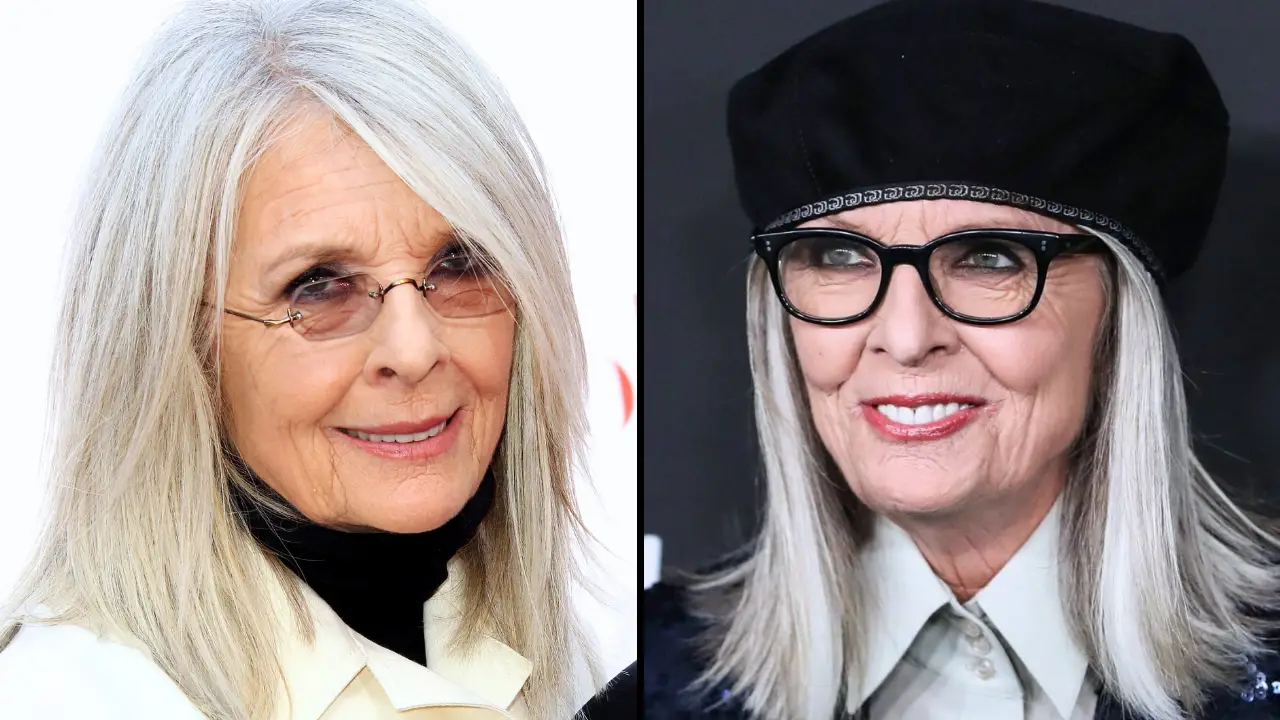
Diane Keaton shared several pieces of information about her health leading up to her tragic death at age 79.
Reports of Keaton’s death have left the film world in collective mourning, prompting many to reflect not only on her extraordinary career but also on the personal health battles she openly discussed over the years.
The actress spoke candidly throughout her life about her experiences with cancer and an eating disorder that shaped much of her early adulthood.

Keaton, who first rose to fame as Kay Adams in Francis Ford Coppola’s The Godfather before winning an Academy Award for Annie Hall in 1977, revealed in past interviews that she had been diagnosed with basal cell carcinoma, a form of skin cancer, at just 21 years old.
In a 2015 interview with the Los Angeles Times, she explained that cancer was sadly a recurring theme in her family medical history.
“It’s a family history,” she said. “I remember my Auntie Martha had skin cancer so bad they removed her nose. My father had basal skin cancer and my brother had it. It’s tricky with this skin cancer. That’s why you’ve got to put the sunblock on.”
Despite that knowledge, Keaton said she did not take sun care seriously for many years.
“Back in my 20s I didn’t pay attention much,” she admitted. “I didn’t research and didn’t really care and that was stupid because it’s dogged me my entire adult life, even recently. I didn’t start sun care until my 40s.”
Keaton’s battle with skin cancer did not end in her twenties.
After dealing with basal cell carcinoma when she was young, she later developed squamous cell carcinoma, another type of skin cancer that required two surgeries to remove.

Keaton’s well-known love of wide-brimmed hats became not just a fashion signature but also a practical part of her commitment to sun protection later in life.
In addition to her cancer diagnosis, the star was open about another deeply personal struggle: bulimia.
Her eating disorder began in her youth, around the time she was performing on Broadway and was asked to lose ten pounds for a role.
In a 2014 appearance on The Dr. Oz Show, Keaton reflected on how quickly it escalated.
“All I did was feed my hunger, so I am an addict,” she said. “It’s true. I’m an addict in recovery, I’ll always be an addict. I have an addictive nature to me.”
During the worst of her disorder, she admitted to consuming up to 20,000 calories a day.
“Typical dinner was a bucket of chicken, several orders of fries with blue cheese and ketchup, a couple TV dinners, a quart of soda, pounds of candy, a whole cake and three banana cream pies,” she recalled.
Bulimia took over her life, becoming something she hid from everyone around her. “I became a master at hiding,” she said in a later interview. “You’re living a lie.”
Eventually, Keaton sought help. She began therapy and attended intensive sessions five days a week. “Somebody mentioned that I seemed to have some mental issues, so I went to an analyst,” she said.

In her 2011 memoir ‘Then Again,’ Keaton wrote about how recovery helped shape her identity and her outlook on life, per E! News.
“I have nothing to hide,” she wrote. “I think I’m a sister to all the rest of the women, and I’m sure men as well, who have had some kind of eating disorder, and I’m a part of the team.”
Despite her fame, Keaton maintained a fiercely private personal life, especially in her later years.
She never married but adopted two children, daughter Dexter and son Duke, in her fifties.
Friends have described her as devoted, funny, creative, and full of emotional honesty.
Following reports of Keaton’s death, friends and colleagues from the film industry shared tributes, remembering her as a true original, both on and off screen.
One close friend reportedly told People magazine that her health had ‘declined very suddenly’ in recent months, calling her passing ‘heartbreaking for everyone who loved her.’
If you or someone you know is affected by any of the issues raised in this story, you can call BEAT Eating Disorders at 0808 801 0677, or email [email protected].