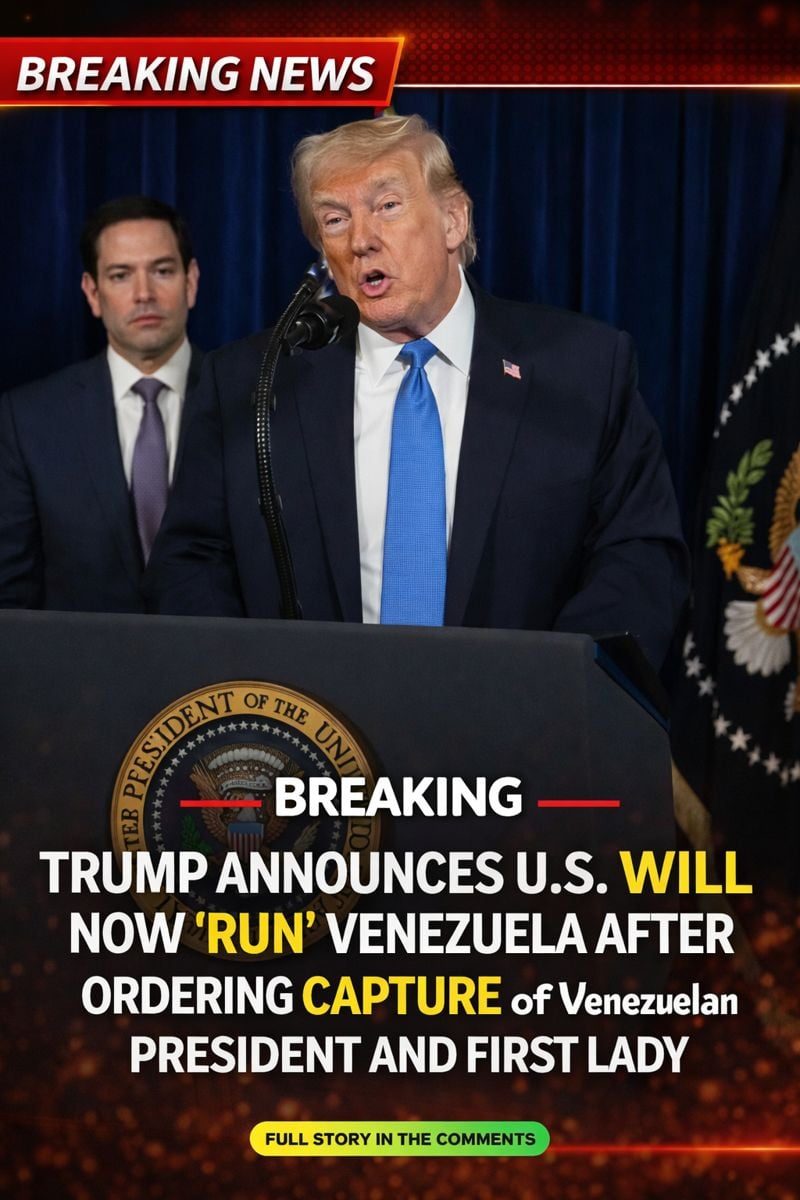
Trump’s words reverberated worldwide. In a late-night address from Mar-a-Lago, he announced the secret capture of Venezuelan President Nicolás Maduro, claiming U.S. forces now controlled the country and its oil.
The declaration came without prior notice to Congress. Trump hinted that Cuba could be “next,” asserting that American boots were already on the ground as a foreign leader was taken into U.S. custody.
The announcement marked a dramatic break from decades of U.S. foreign policy. In a single operation, American forces dismantled a sitting government and detained its president and first lady.
Trump portrayed the mission as swift and bloodless. He insisted no U.S. service members were lost and promised “peace, liberty, and justice” for Venezuelans.
At the same time, airstrikes reportedly struck military bases, ports, and communications sites across Venezuela, underscoring the scale and severity of the action.
The rhetoric of liberation collided with unease over intent. Trump openly discussed managing Venezuela’s oil and overseeing a political transition, raising alarms about sovereignty and resources.
In Washington, questions mounted over the sidelining of Congress and the legality of such sweeping unilateral action. Allies and critics alike sought clarity on the strategy and its limits.
For Venezuelans living beneath the flight paths, and for a hemisphere watching closely, Maduro’s capture feels less like an ending than the beginning of an uncertain and volatile new chapter.