Everybody wants a piece of Bad Bunny.
Bad Bunny made history on Sunday. Bunny tapped several A-list stars to make cameos during his 2026 Super Bowl halftime performance. However, the scenery also featured real individuals who had everyone’s attention.
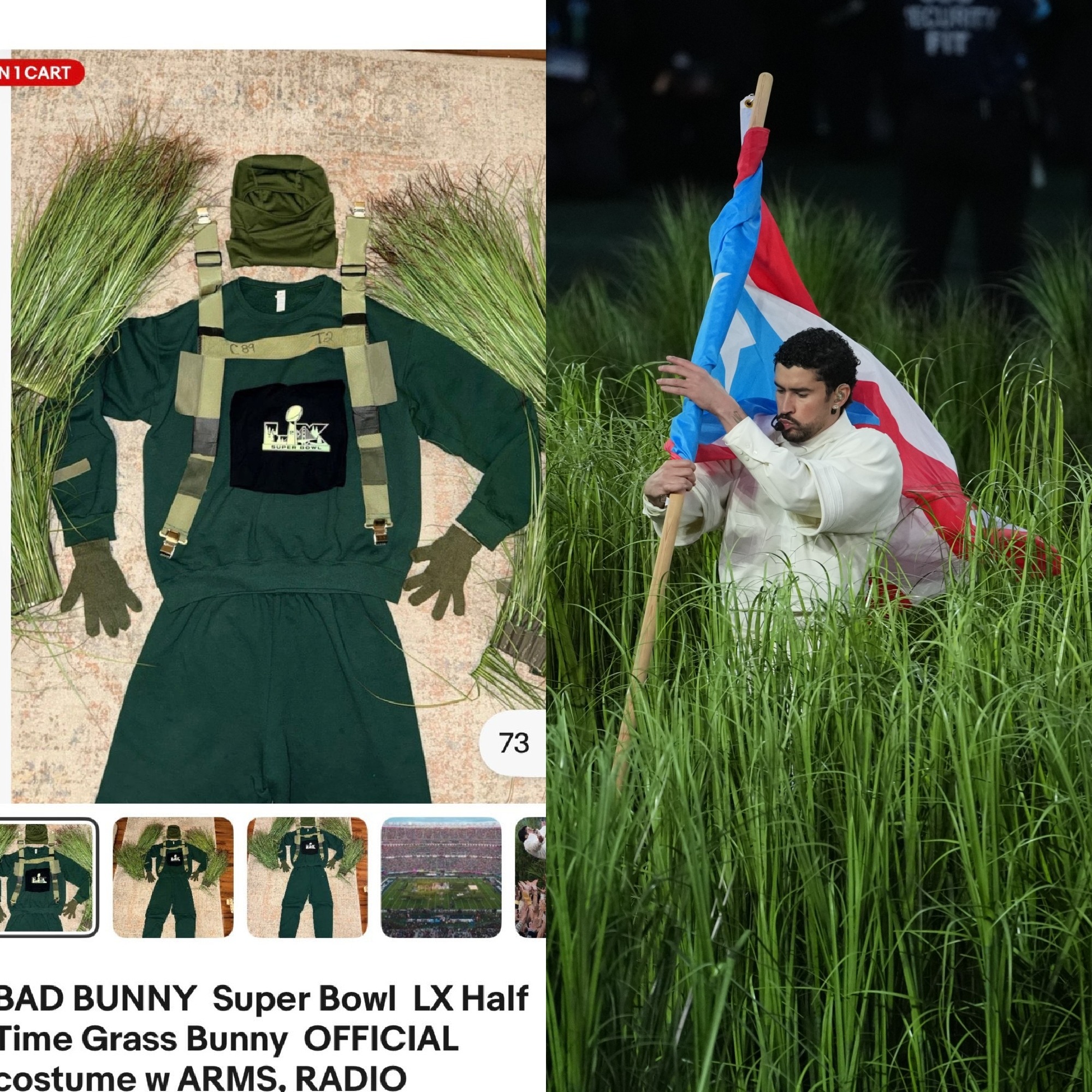
Hundreds of people were shrouded in grass costumes to help set the scenery. The bushes on the field during the halftime show became a meme after the internet found out they were actually human performers. One of the performers even did the 6-7 meme on the field.
Bunny, fresh off three wins at the Grammy Awards just a week before the Super Bowl, headlined the show, but the grass stole it in the end. Hidden inside the sugarcane grass beside him were humans hired to stand there in costume.
After the show, dozens of people online wanted to know more about the people and how this entire thing came about. Now, fans can realize their dream of becoming a grass person. Folks who were in those costumes have been putting them up on resale sites. They are trying to cash in on Bad Bunny’s performance.
One of the listings on eBay has one costume going for $5,000.
20-year-old college student Nikolai Petukhov was one of the people who appeared on the field in a bush costume. “I just shot my shot and the rest is history,” he said of filling out an application to be a sugarcane bush.
Bad Bunny Made History
Latin artist Bad Bunny made history at the Super Bowl LX halftime show as the first artist to perform an entire set almost exclusively in Spanish. His historic Super Bowl Halftime Show featured celebrity guests such as Lady Gaga, Ricky Martin, and Cardi B.
How big was Bad Bunny’s Super Bowl 60 halftime show? The Puerto Rican artist drew more than 100 million live viewers to NBC to watch the show. According to a press release from NBC, Bad Bunny’s Super Bowl halftime show averaged 128.2 million viewers.
That would make Bad Bunny’s performance the fourth-most-watched Super Bowl halftime show in history. His performance is behind Kendrick Lamar (133.5 million – 2025), Michael Jackson (133.4 million – 1993), and Usher (129.3 million – 2024).